B2C · SaaS · E-commerce · Shipping logistics

Workflow Optimization

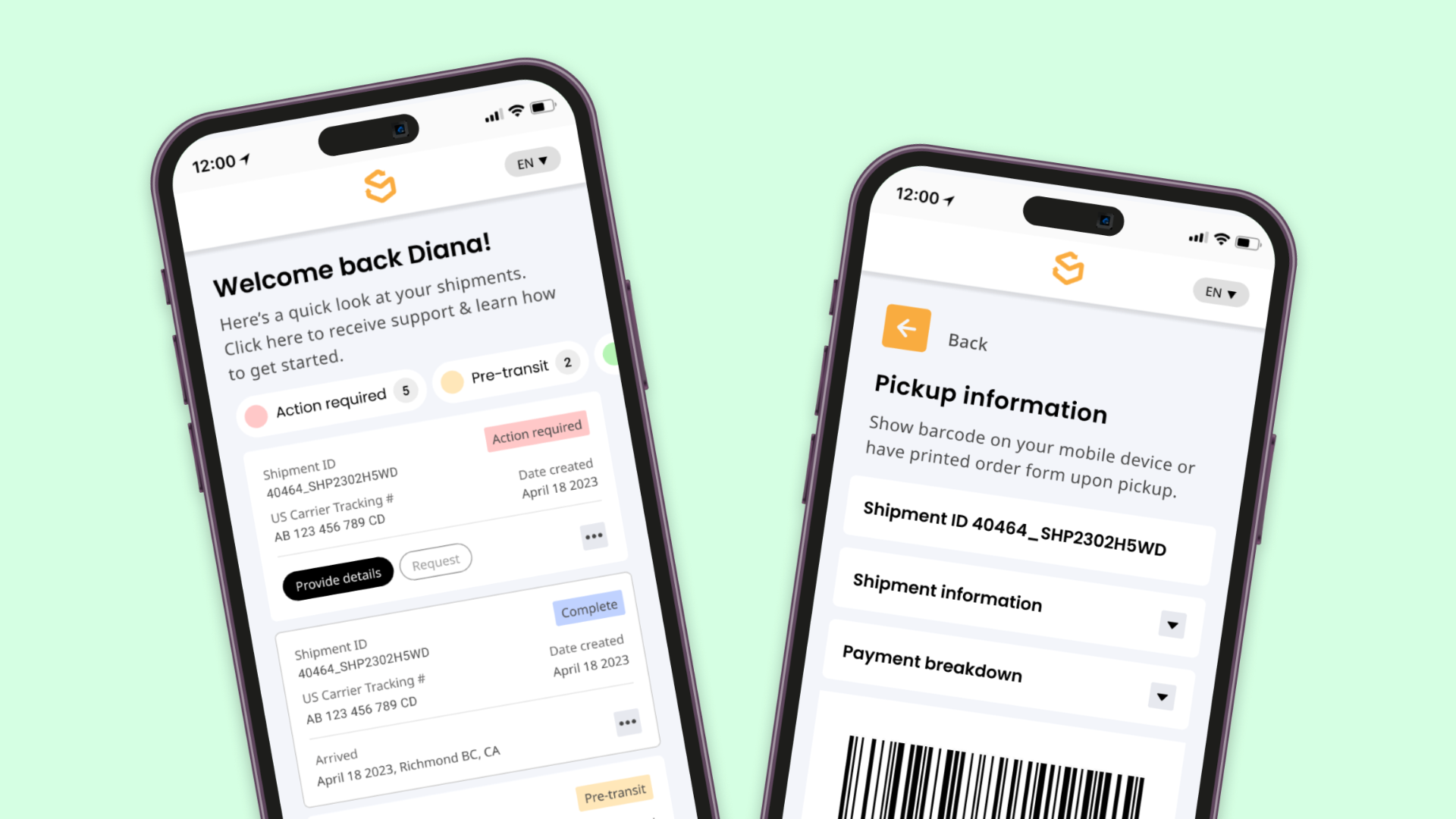
Shippsy, a B2C innovator, transforms Canadian shopping with a streamlined solution for U.S. store purchases. Combining competitive pricing with enhanced transparency via an upgraded dashboard, Shippsy offers a seamless experience trusted by thousands of users every day.

Workflow Optimization
Role

Senior UX/UI Designer

Challenge

Redesign the Shippsy dashboard, optimizing for mobile and desktop.

Timeframe

6 weeks

Structure

User research, user-centred design, cross-team collaboration, iteration, prototype, and implementation support.

Process highlights

How the work came together.

Design brief

All known specs, links, references, and copy docs were housed in a single brief that every team member could access.

Research

Competitive analysis paired with a site audit and information architecture review to fully understand the variables we were working with.

Cross collaboration

Every step required collaboration so each teammate's voice was heard, goals stayed aligned, and expectations were managed.

User interviews

Internal user interviews surfaced insight that shaped design thinking and the final outcomes.

Research & Discovery

To understand challenges in the shipment journey, I conducted user interviews, reviewed internal operational workflows, performed a full site audit, and ran a competitive analysis of comparable shipping and logistics platforms. I partnered closely with the Customer Support Manager and Cross Border Specialist to surface recurring pain points, support trends, and operational blockers impacting both customers and internal teams.

From this research, I mapped the end-to-end shipment experience and identified key friction points across tracking, customs, and pickup. This informed a simplified, more intuitive flow designed to reduce friction, improve transparency, and decrease reliance on customer support across desktop and mobile.
Reducing Customer Support Dependency

Customer support was overwhelmed with requests related to shipment visibility and cross-border processing. Users frequently contacted support to understand where their package was, when it would clear customs, how fees were calculated, and how to complete pickup.

A major friction point was the pickup process, which required users to print a barcode in advance. Many users couldn't locate it or weren't aware it was required, resulting in repeated support tickets and failed pickups.

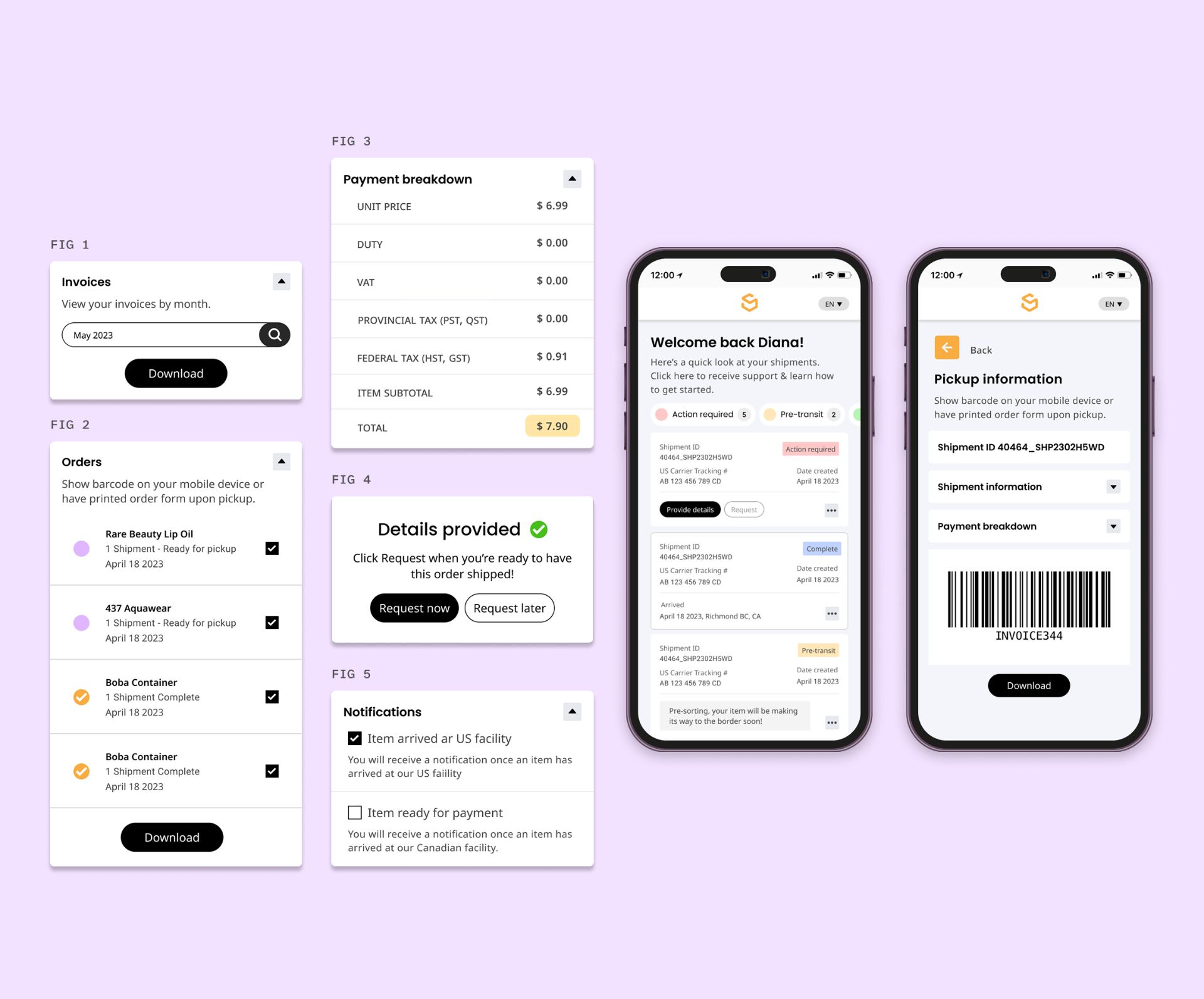
To address this, I redesigned the experience to surface critical information more clearly and introduce self-serve functionality across key moments in the journey, including mobile-accessible pickup barcodes and clearer guidance throughout shipment progress (Fig. 2–5).

Shippsy interface figures: invoices, orders, payment breakdown, details provided, notifications, and mobile pickup screens

Simplifying Shipment Statuses & Critical Workflows

User interviews and stakeholder workshops revealed that the tracking system relied on 15 ambiguous shipment statuses, which users consistently misinterpreted. I consolidated these into 6 clear, actionable statuses supported by concise explanatory copy that clarified where a shipment was and what action (if any) was required.

A critical breakdown occurred in the "Provide Details" step (Fig. 4), which was required for customs clearance but poorly understood. Users often weren't sure if their submission was successful, leading to delays and support requests.

I redesigned this flow to include clear requirements, progress indicators, and confirmation states, improving user confidence and reducing uncertainty in a high-friction stage of the process.

Increasing Transparency & Power User Efficiency

To further reduce support dependency and improve efficiency, I introduced features that increased visibility and control across the shipment lifecycle. This included detailed payment and cost breakdowns (Fig. 3), customizable shipment notifications (Fig. 5), and mobile-accessible pickup barcodes to eliminate the need for printing (Fig. 2).

For power users and finance teams, I also designed a fast invoice search and download experience (Fig. 1), enabling efficient retrieval and tracking of orders at scale.

The redesign significantly reduced confusion and support dependency, improving self-service across key workflows and reducing operational load on customer support teams.

Outcome

A clearer, faster dashboard that thousands of cross-border shoppers now rely on every day — with a redesigned mobile experience that mirrors desktop parity.

Recommendations

"Amanda's unwavering work ethic was consistently impressive, meeting project deadlines with high-quality results under tight time constraints. Her collaborative mindset and expertise played a pivotal role in upskilling team members and overall proficiency."
Frank SchiraldiVP, Platform Architect at Sago